Nutmeg (Myristica fragrans)
Whole nutmeg is an aromatic spice obtained from the dried seed kernel of the tropical tree Myristica fragrans, native to the Banda Islands in the Maluku archipelago of Indonesia. Recognized for its warm, sweet and spicy aroma, with notes reminiscent of wood, nuts and cloves, nutmeg is one of the most appreciated seasonings in international cuisine. Its whole form helps preserve natural essential oils and provides an especially fresh, intense fragrance when grated immediately before use.
For centuries, nutmeg was one of the most valuable spices in international trade. Its 1 Kg format is particularly suitable for restaurants, bakeries, pastry kitchens, hotels, industrial kitchens and foodservice operations requiring consistent aromatic quality and versatility across numerous preparations.
Organoleptic Properties
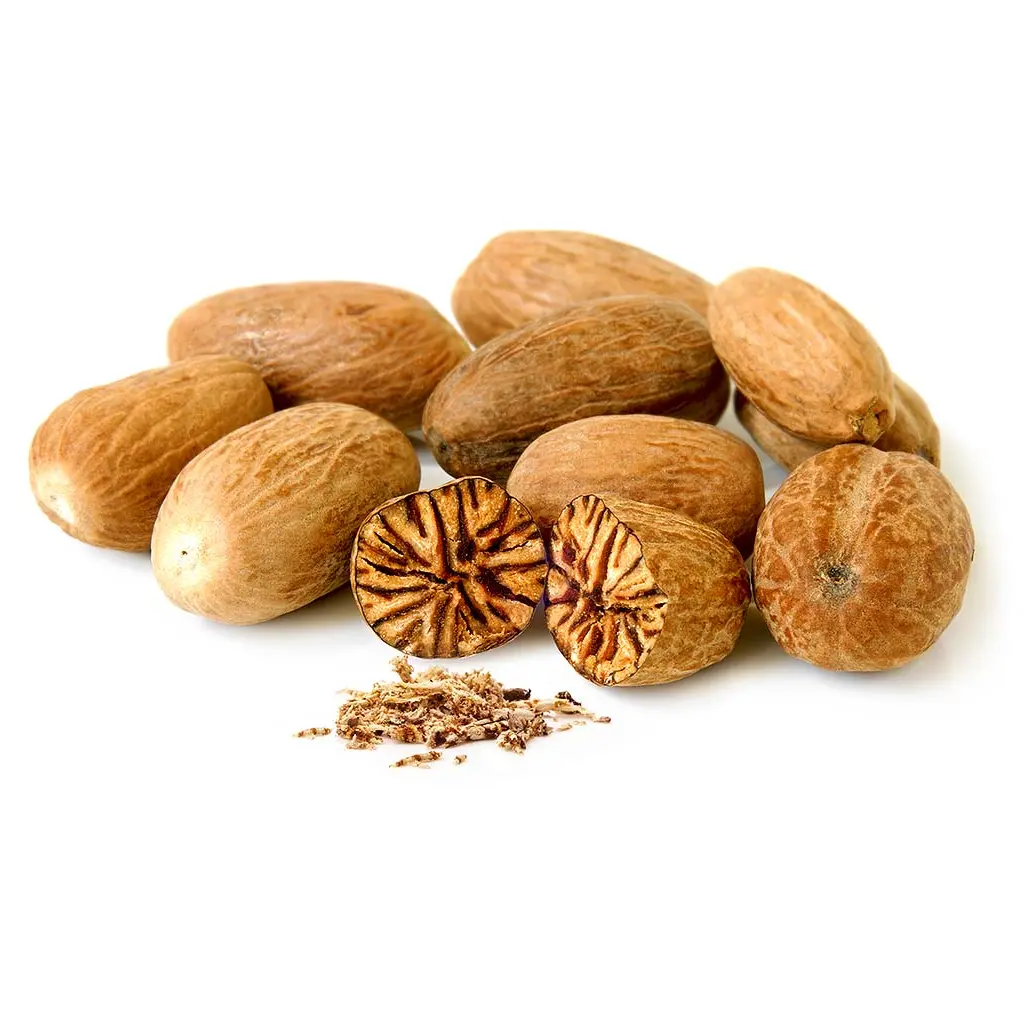
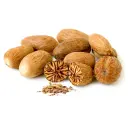
Dried seed kernel with an oval to slightly rounded shape, firm surface and coloration ranging from light to dark brown, with natural wrinkles and grooves. When cut or grated, it reveals a distinctive marbled interior with brown and cream-colored veins. Its aroma is intense, warm, sweet, slightly resinous and spicy, while its flavor combines notes of nuts, wood, mild pepper and subtle bitterness. Its sensory profile comes from natural essential oils and aromatic compounds, including sabinene, pinene and myristicin. Whole nutmeg gradually releases its fragrance when grated and generally retains its aromatic characteristics better than pre-ground preparations.
Suggested Uses
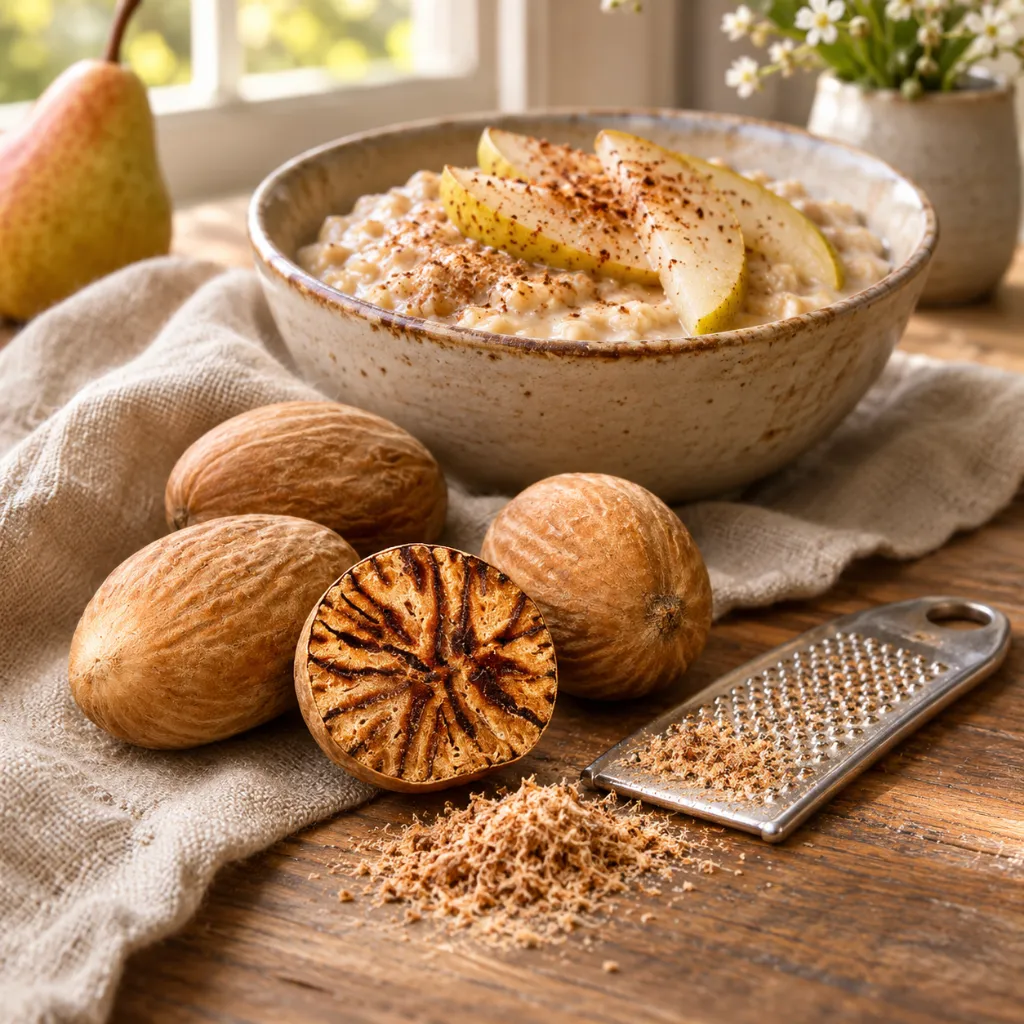
Particularly suitable for béchamel sauce, mashed potatoes, gratins, creams, soups, pasta, risotto, spinach and cheese-based preparations. Nutmeg is a traditional seasoning in lasagna, croquettes, soufflés, white sauces and spice blends. In baking and confectionery, it is commonly used in cakes, cookies, spiced breads, apple pies, puddings, custards, rice pudding and pumpkin desserts. It pairs especially well with cinnamon, cloves, ginger, cardamom, vanilla and chocolate, and may also be incorporated into coffee, hot chocolate, chai and spiced milk beverages.
For best results, finely grate only the amount required and add it directly during preparation. Its concentrated aroma allows small quantities to provide depth and complexity. Nutmeg should only be used in moderate culinary quantities, as excessive consumption may cause poisoning and serious adverse effects.
Format
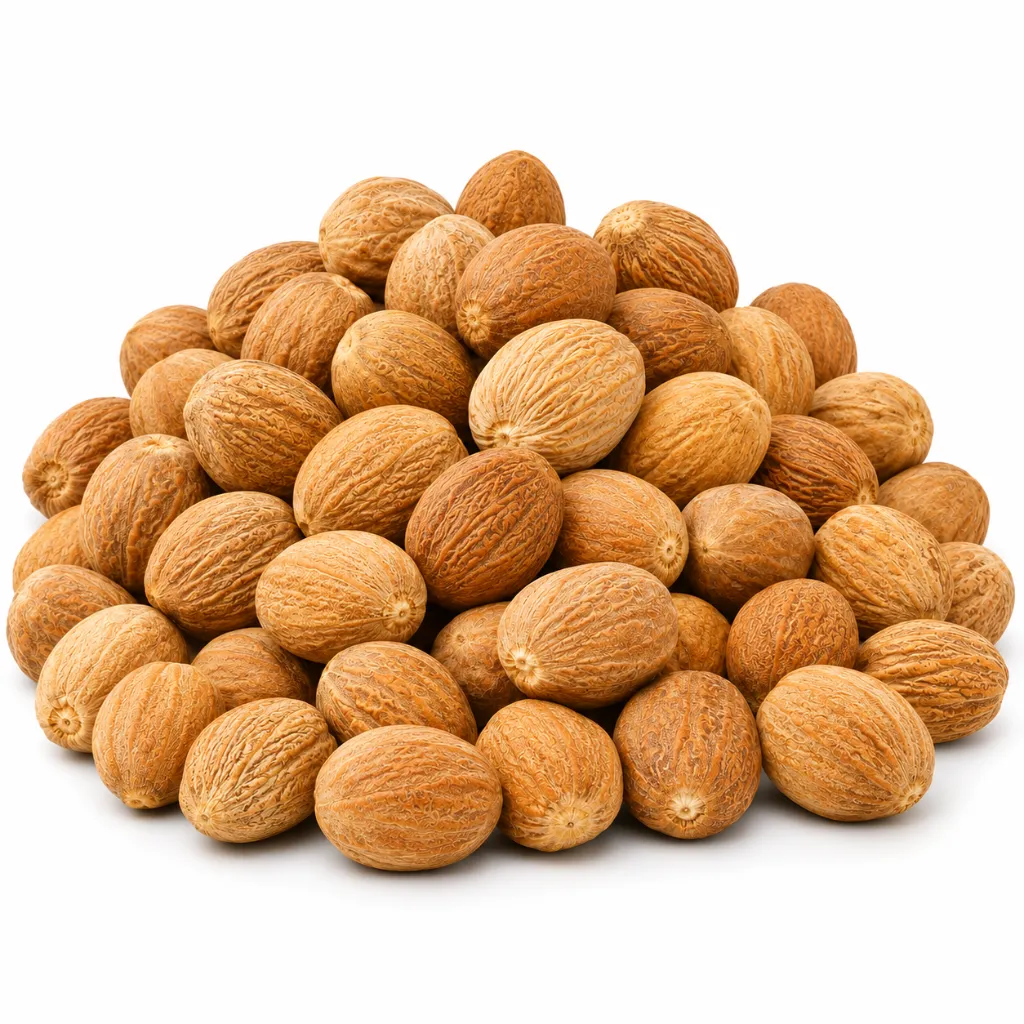
1 Kg pack of whole nutmeg (Myristica fragrans) originating from Indonesia. Dried aromatic seed kernels intended for professional and commercial culinary use. Individual pieces may naturally vary in size, shape, weight and coloration according to raw material characteristics and sorting processes.
Storage and Handling
Store in a cool, dry and clean place protected from direct sunlight, keeping the package tightly sealed to minimize exposure to air and moisture. Avoid high temperatures, condensation and storage near strongly aromatic products. Whole nutmeg offers better preservation of volatile aromatic compounds than ground spice, making it advisable to grate immediately before use. For professional operations, keep in properly labeled food-grade containers and handle only with completely dry utensils.
Quality and Selection Criteria
Select kernels that are whole, firm, dry, clean and characteristically brown, free from abnormal moisture, mold, infestation, deterioration and foreign odors. When grated, good-quality nutmeg should release a warm, intense and spicy aroma, without rancid or fermented notes. The interior should display its characteristic marbled appearance and compact structure. Commercial quality depends on kernel integrity, preservation of essential oils and appropriate drying and storage conditions.
Season
The nutmeg tree thrives in warm, humid tropical regions, where fruit production can occur during different periods of the year. In Indonesia, harvesting seasons vary according to growing region and weather conditions. After harvesting, fruits are opened to separate the seeds, which are subsequently dried and conditioned for distribution, supporting relatively consistent commercial availability throughout the year.
Origin
Indonesia.
The history of nutmeg is deeply connected to the Banda Islands, regarded as its native homeland. For centuries, this small archipelago was one of the world's principal sources of nutmeg, attracting Asian, Arab and European merchants. During the sixteenth and seventeenth centuries, its extraordinary commercial value made the spice a source of competition among colonial powers, particularly Portugal and the Netherlands, profoundly influencing the history of international trade.
One of nutmeg's most fascinating botanical characteristics is that a single fruit produces two distinct spices: nutmeg, obtained from the seed kernel, and mace, produced from the reddish aril surrounding the seed. Although both share warm, spicy aromatic profiles, mace generally has a more delicate character. This botanical distinction, together with its origin in a relatively small island territory, made nutmeg one of the most emblematic spices of the historic trade routes, a culinary legacy that remains important in contemporary gastronomy.