Date Sugar | DatSweet® | Guanajuato | GRL
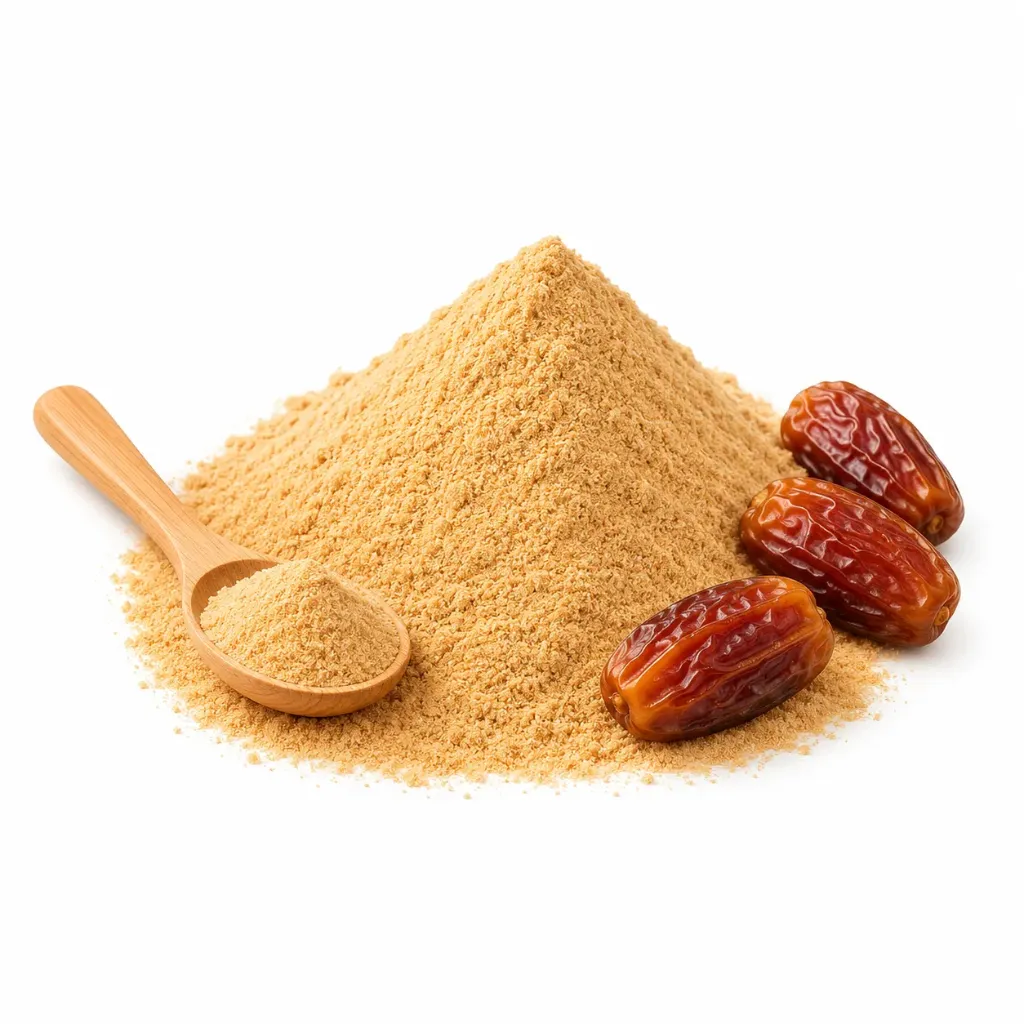
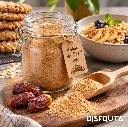
DatSweet® Date Sugar is a naturally derived sweetening ingredient made exclusively from dehydrated and finely ground dates (Phoenix dactylifera L.). It is characterized by its distinctive beige to golden-brown color, naturally sweet flavor with delicate caramel, honey, and dried-fruit notes, and finely granular texture. Unlike conventional refined sugar, it is produced through the physical processing of whole date fruit, retaining some of its naturally occurring dietary fiber, minerals, and plant compounds. Commercialized under the DatSweet® brand in Guanajuato, Mexico, and offered in bulk by kilogram (GRL), it is a versatile ingredient for bakeries, pastry shops, restaurants, cafés, food manufacturers, and specialty natural-food businesses.
Organoleptic Properties
A powdered product with fine to slightly granular particles, ranging in color from beige and light amber to golden brown, depending on the date variety and dehydration conditions. It delivers a warm, naturally sweet, mildly fruity aroma with characteristic notes of caramel, honey, and ripe dried fruit. Its flavor is pleasantly sweet with moderate persistence, subtle toasted undertones, and a light molasses-like finish. The texture is soft and relatively free-flowing under dry storage conditions, although moisture absorption may cause compaction or the formation of small lumps.
Physical Characteristics and Composition
Produced through the selection, dehydration, and grinding of dates into a powder suitable for a wide range of food applications. Its composition includes naturally occurring fruit sugars, primarily glucose and fructose, together with dietary fiber and small amounts of minerals. Because it consists of ground fruit rather than crystallized sucrose, it does not dissolve completely in water and may contribute fine particles, color, and body to finished formulations. Particle size may vary according to milling and sieving conditions. Based on its declared single-ingredient formulation, it contains no added refined sugars.
Precision Nutrition's Encyclopedia of Food+1
Ingredients
Dehydrated and ground dates (100%).
A single-ingredient product formulated without the addition of cane sugar, syrups, artificial colors, or flavorings.
Nutritional Properties
Date sugar provides energy primarily through the sugars naturally present in the fruit. Unlike refined white sugar, it retains dietary fiber and varying amounts of potassium, magnesium, and other minerals, together with naturally occurring phenolic compounds. These characteristics make it an appealing ingredient for formulations seeking sweetness from whole-fruit sources. Nevertheless, it remains a concentrated source of sugars and carbohydrates and should be consumed in moderation as part of a balanced diet. Its nutritional composition varies depending on the date variety, dehydration level, and processing conditions.
Iowa State University Extension and Outreach+1
Culinary Uses
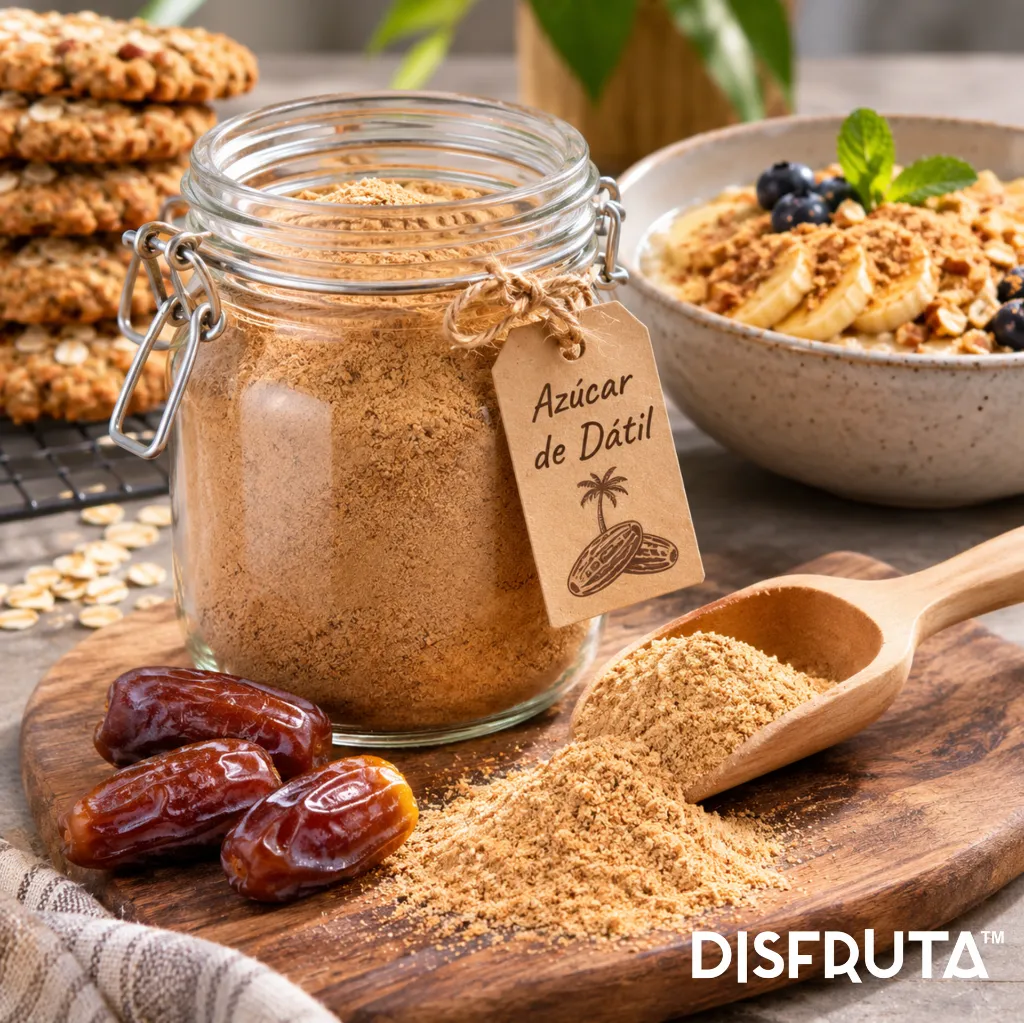
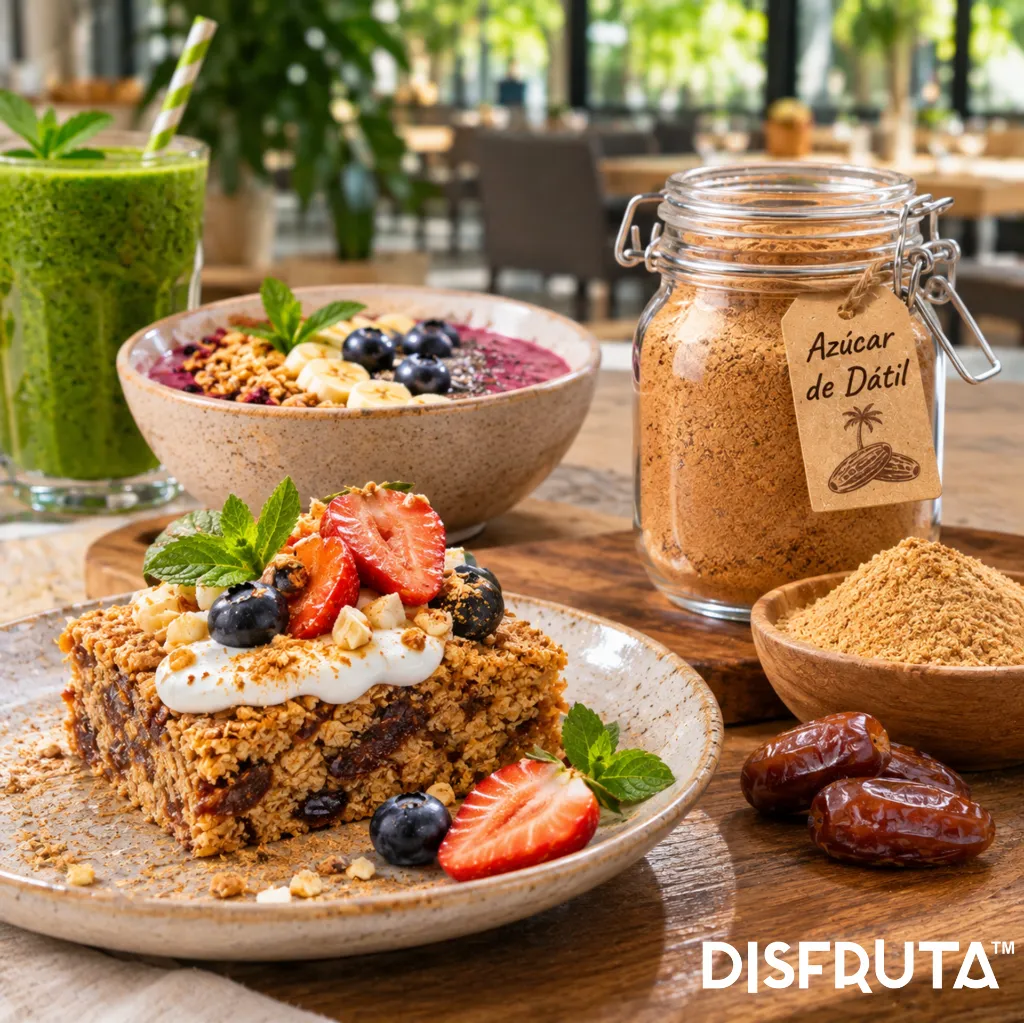
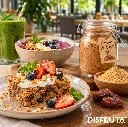
A versatile ingredient for baking, pastry applications, cookies, muffins, brownies, cakes, energy bars, granola, pancake mixes, cereals, and health-oriented food products. It can be incorporated into yogurt, oatmeal, thick smoothies, plant-based desserts, and recipes featuring nuts and dried fruits. In contemporary cuisine, it is also used in dressings, marinades, sweet-and-savory sauces, and glazes, contributing natural sweetness and caramel-like flavor notes. It pairs particularly well with whole grains, cocoa, cinnamon, walnuts, almonds, and seeds. Due to its fiber content and limited water solubility, it performs best in solid, semi-solid, or blended applications where its texture can be effectively incorporated.
Food Industry Applications
Used as a fruit-derived sweetening ingredient in baked goods, snacks, food blends, cereal bars, and pastry formulations. Its characteristic flavor profile supports the development of products with natural caramel and dried-fruit notes, while its color contributes warm tones to finished products. It may be used as a partial or complete replacement for refined sugar when supported by appropriate formulation trials, since its sweetness, moisture behavior, particle size, and processing characteristics differ from those of sucrose. It is not a direct technological equivalent in applications requiring sugar crystallization, uniform caramelization, or complete dissolution.
Storage and Handling
Store in a cool, dry, clean environment, protected from direct sunlight and preferably in its original tightly sealed packaging. Avoid exposure to humidity, steam, and sudden temperature changes, as the product may absorb atmospheric moisture and develop clumps. Keep away from strongly aromatic substances and use completely dry utensils when handling. Shelf life should be established according to the manufacturer's specifications, packaging characteristics, and actual storage conditions.
Commercial Presentation
Available in bulk by kilogram (GRL), suitable for portioning and use in professional kitchens, health-food businesses, bakeries, pastry shops, and food-processing operations. Its presentation accommodates variable quantities according to operational requirements. Food-grade airtight containers are recommended after opening to help maintain aroma, texture, and overall product quality.